Starting beekeeping is easier than you might think. Here’s the path most of our new members follow.
1. Come and Meet Us
Visit one of our apiary sessions and see what beekeeping is really like.
2. Learn the Basics
Borrow protective clothing and watch an experienced beekeeper inspect a hive.
3. Join Conwy Beekeepers
Become part of our friendly community and start learning with experienced members.
4. Buy Equipment
We’ll help you choose the right kit and avoid costly mistakes.
5. Get Your Bees
We’ll introduce you to trusted local breeders when you’re ready.
6. Enjoy Your First Season
Keep in touch with your Bee Buddy and gain confidence as your colony grows.
Your First Visit
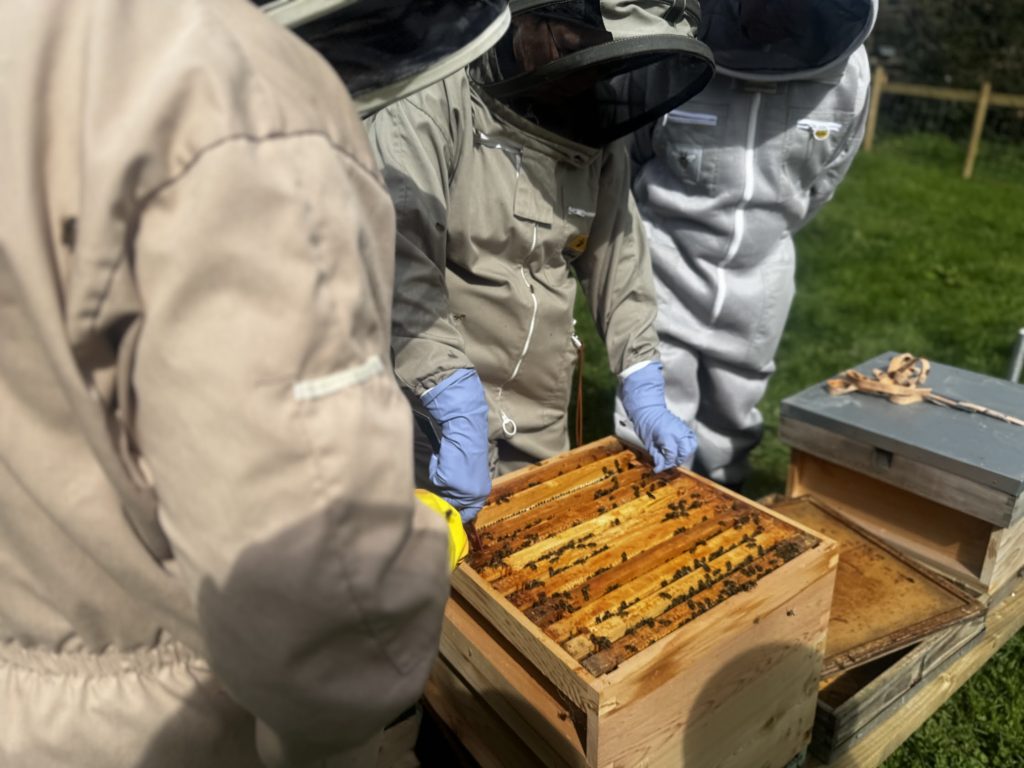
What to expect
✔ Meet experienced members
✔ Borrow a bee suit
✔ Watch a hive inspection
✔ Ask questions
✔ No pressure to handle bees
✔ Tea afterwards!
Equipment
A good-quality bee suit is your most important piece of equipment. Choose a full suit with an integrated veil, sturdy gloves and Wellington boots that cover your ankles. While you can borrow protective clothing for your first few visits, you’ll soon appreciate having your own well-fitting suit.
We recommend starting with a standard National Hive, the most widely used hive in the UK. It’s easy to obtain replacement parts, accessories and advice, and it’s the type used by many of our members. Sticking to a common standard makes it much easier to get help when you’re starting out.
A smoker produces cool smoke that helps calm the bees during inspections, making them less defensive and easier to work with. A reliable smoker is an essential part of every beekeeper’s toolkit. We’ll show you how to light and use one safely during our apiary sessions.
A hive tool is the beekeeper’s equivalent of a multi-tool. It’s used to separate hive parts that bees have sealed with propolis, lift frames and scrape away excess wax. It’s a simple but indispensable piece of equipment that you’ll use every time you inspect your hive.
Where to Buy?
E.H. Thorne – Good value suits suitable for beginners.
National Bee Supplies – A popular choice with a wide range of hives, clothing and accessories.
BB Wear – Comfortable, Well-made suits with excellent visibility.
B J Sherriff – Premium quality, British-made protective clothing.
Abelo – Excellent quality protective clothing and spares
Simon The Beekeeper – Affordable protective clothing and equipment
C Wynne Jones, Ruthin – Our local E.H. Thorne agent, making it easy to order equipment locally.
E.H. Thorne – One of the UK’s oldest and largest beekeeping suppliers, offering excellent quality equipment. Their January sale is particularly good value.
National Bee Supplies – A popular choice with a wide range of hives, clothing and accessories.
Maisemore Apiaries – Well-known for quality wooden hives and starter kits.
Paynes Bee Farm – Good value for poly hives, nuc boxes and equipment.
Abelo – excellent quality poly hives and equipment
Simon The Beekeeper – Affordable beekeeping equipment, excellent for beginners.
Every beekeeper will need:
- Hive tool
- Smoker
- Smoker fuel
- Bee brush
- Frame grip (optional but useful)
These are available from all of the suppliers listed here
Don’t Buy Your Bees Yet!
🐝 BEFORE YOU BUY BEES…
COME ALONG TO ONE OF OUR APIARY MEETINGS FIRST.
WE’LL HELP YOU DECIDE:
- WHETHER BEEKEEPING IS RIGHT FOR YOU
- WHICH HIVE SUITS YOU
- WHERE TO BUY LOCAL BEES
- WHAT EQUIPMENT YOU REALLY NEED
MANY BEGINNERS SAVE HUNDREDS OF POUNDS BY GETTING ADVICE FIRST.
FAQ
No. In fact, we recommend that you don’t buy bees until you’ve attended an apiary session or completed some introductory training. This gives you the opportunity to learn the basics and decide whether beekeeping is right for you before making a significant investment.
Yes. We welcome prospective members to come along and see what beekeeping involves. It’s a great opportunity to meet experienced beekeepers, ask questions and get a feel for the hobby before joining.
Yes. We have a limited number of bee suits available for visitors and new members to borrow during apiary sessions. Once you’ve decided to continue, we’ll advise you on choosing suitable protective clothing.
Not necessarily. Many beekeepers keep bees in modest gardens, allotments or on rural sites with the landowner’s permission. We’ll be happy to discuss whether your location is suitable and what local considerations you should keep in mind.
Most beginners spend around £500 during their first year. This typically covers protective clothing, essential tools, training and your first hive. We’ll help you prioritise your purchases so you only buy what you need, when you need it.
Not necessarily. Many beekeepers keep bees in modest gardens, allotments or on rural sites with the landowner’s permission. We’ll be happy to discuss whether your location is suitable and what local considerations you should keep in mind.
We strongly recommend starting with a locally bred nucleus colony from a trusted beekeeper. Local bees are generally better adapted to North Wales conditions, and we can introduce you to reputable breeders when you’re ready.
Absolutely. One of the greatest benefits of joining Conwy Beekeepers is the support of our experienced members. We can pair you with a local bee buddy who can offer practical advice during your first season and beyond.