

Swarm help
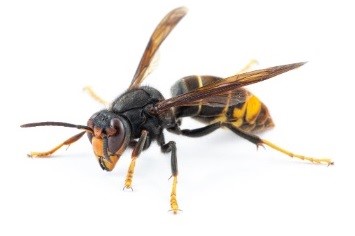
Important: We do not clear wasp nests. Please contact Conwy Pest Solutions.
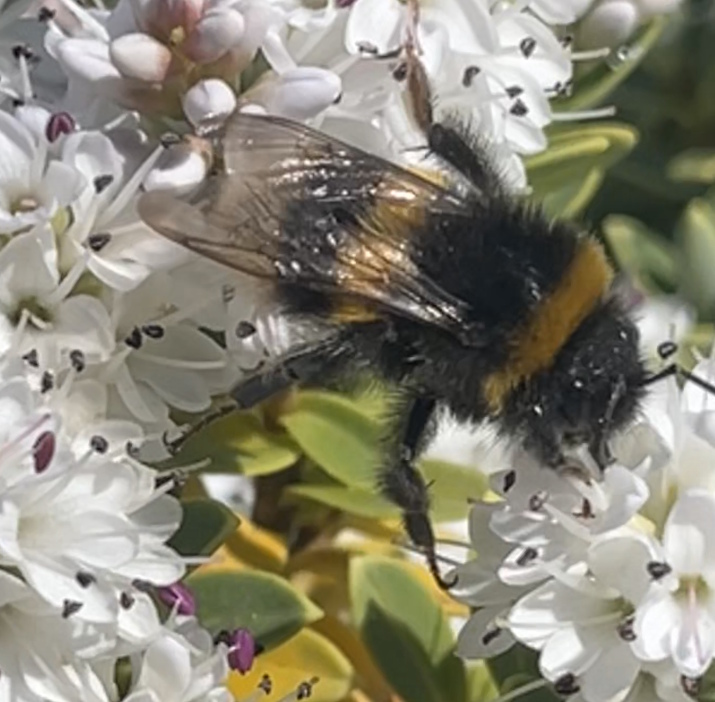
We do not remove bumblebee nests, or solitary bees. for bees in roofs and chimneys, please contact a specialist beekeeper with the appropriate insurance, such as Felin Honeybees.
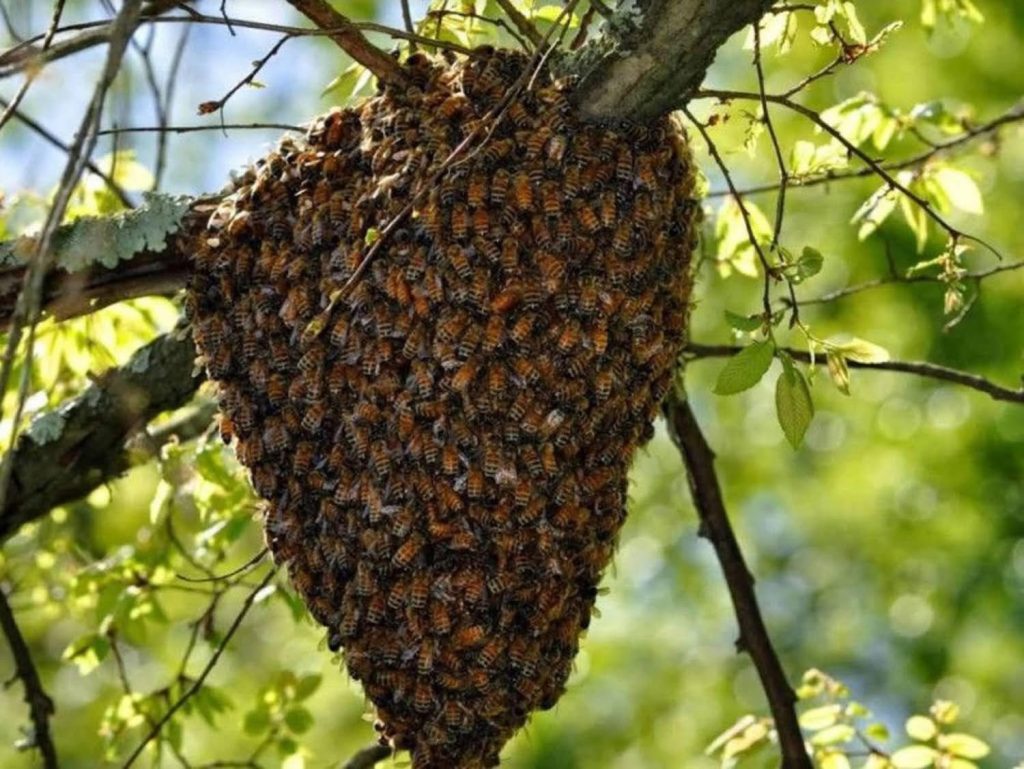
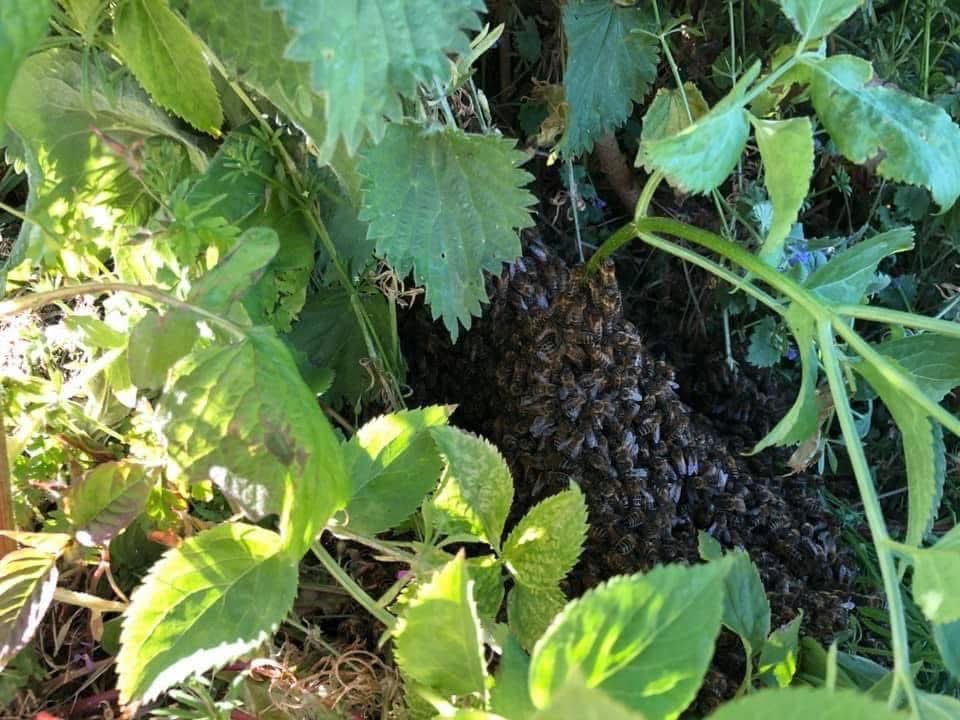
If you have found a cluster of bees in your garden, hedge, tree, shed or on a fence, it may be a swarm of honeybees. Please do not panic. Swarming bees are usually calm and unlikely to sting if left undisturbed.
What to do now
- Use the WBKA swarm map and enter your postcode to find a local beekeeper.
- Or post a photo, the location of the swarm, and your postcode on the Conwy Beekeepers Facebook group.
- Once the swarm has been collected, please update your post to say “Swarm has now been taken”.
What is a swarm?
Swarming is how one colony becomes two. In May or June, the old queen leaves the hive with thousands of worker bees while scout bees search for a new home. The swarm may settle temporarily on a tree branch, fence or wall.
At this stage, a settled swarm is usually calm and can often be safely collected by a beekeeper.
Other types of bees
Bees in a bird box
These are usually Tree Bumblebees. They are harmless and beneficial. Please leave them undisturbed.
Bees in a chimney or roof
Often honeybees. If newly arrived, they may move on. Established colonies are difficult to remove.
Bees in a shed
Often wasps rather than bees. Wasps build paper nests and may require pest control.
Bees in a compost heap
Usually bumblebees. They are important pollinators and should not be disturbed.
More information: Bumblebee Conservation Trust
Bees in lawns or walls
These are likely solitary bees, such as mining or mason bees. They are harmless.
More information: Wildlife Trusts guide
Images of swarms