Bardsey Bees – Beekeeping on Ynys Enlli (2005)
In 2005, CBKA member Steve Porter established a small out-apiary on Bardsey Island (Ynys Enlli), off the Llŷn Peninsula. This article describes the challenges of transporting, managing and harvesting honey from one of the most remote beekeeping locations in North Wales.

The idea
Bardsey Island lies a couple of miles off the tip of the Llŷn Peninsula in North West Wales. It is a National Nature Reserve and a Site of Special Scientific Interest, home to species such as the Bardsey apple, Atlantic grey seals and thousands of Manx shearwaters.
Having visited the island several times, I began to think it would be an excellent place to keep a small number of beehives. According to one of the residents, bees had been kept there about 50 years earlier, with mixed success.
Getting the bees to the island
After obtaining the necessary permissions, I transported two hives to the island during the May half-term break. The crossing by passenger ferry was relatively calm, although getting the hives out to the ferry by inflatable rowing boat was more challenging.
Once on the island, the hives were moved along the only track using a combination of wheelbarrow and quad bike before reaching their final location behind the bird observatory.

Early foraging
Within an hour of opening the hives, bees were already foraging half a mile away on pink thrift, which covers much of the southern end of the island. Along with blue squill, this provides the main spring forage. Other sources include blackberry, gorse, clover, thistle and heather.

Managing the hives
The project was made more viable by the fact that I am a keen sea canoeist, allowing me to reach the island regularly without relying on the ferry. However, transporting equipment by kayak was not always straightforward. Carrying a brood box across open water to deal with a swarm proved particularly challenging—and ultimately unsuccessful.
The hives were secured carefully against both strong winds and sheep. My intention was to return later in the season to extract honey and prepare the colonies for winter.
Autumn visit and extraction
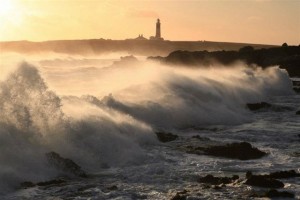
Repeated attempts to return to the island were delayed by poor weather. Eventually, in late November, I set out alone by kayak from Aberdaron at first light. The conditions were calm, and the island appeared in the early sunrise as I approached.
At the hives, I worked carefully and removed 21 frames of honey. Each frame was wrapped and carried back to the kayak, about half a mile away. Packing everything into the kayak without damaging the comb proved difficult, and the return journey was, unsurprisingly, a sticky one.
Although the method was far from ideal, I was able to extract around 30lb of honey from what had been a small colony earlier in the year.
Outcome
Despite the logistical challenges, the first season of beekeeping on Bardsey Island was successful. The colonies adapted well to the environment and produced a modest but satisfying honey yield.
By Steve Porter (CBKA)