Spring on Bardsey Island
Who would have thought that, a few years after bringing colonies of honeybees to Bardsey Island (Ynys Enlli), we would be living and working here ourselves? Unexpectedly, the bees helped lead us here.
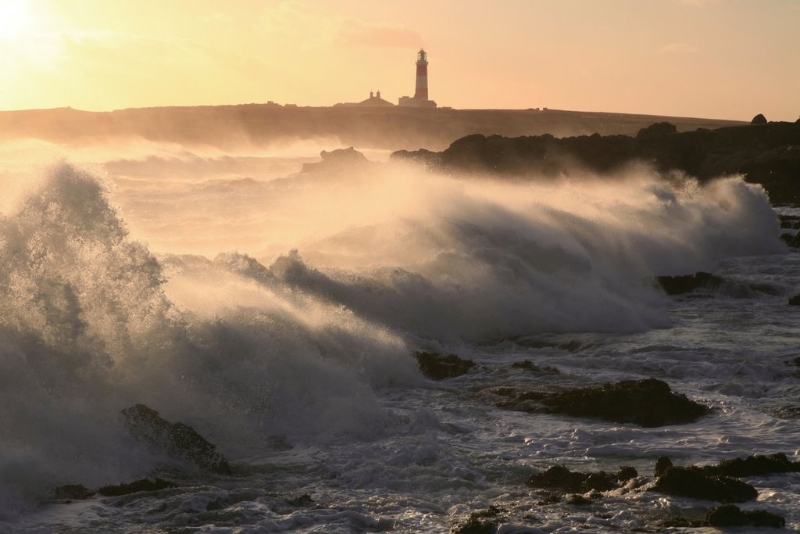
We are now just emerging from our fifth winter on the island, and what a windy one it has been. Wind speeds of 93mph were recorded in Aberdaron during January and, as all our supplies have to come by boat across the notorious Bardsey Sound, we always keep one eye on the weather. Despite the milder temperatures, another effect of the storms has been salt scorch on vegetation nearest to the coast, and many of the pastures are only just beginning to recover.
The first signs of spring
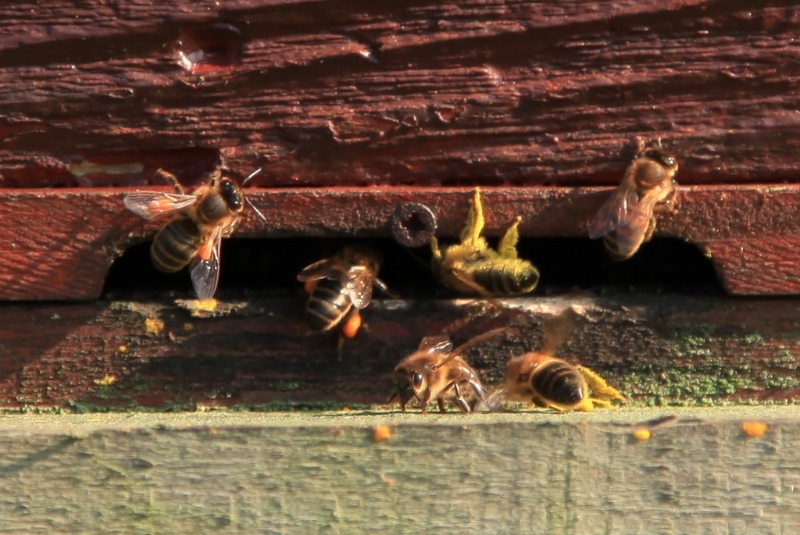
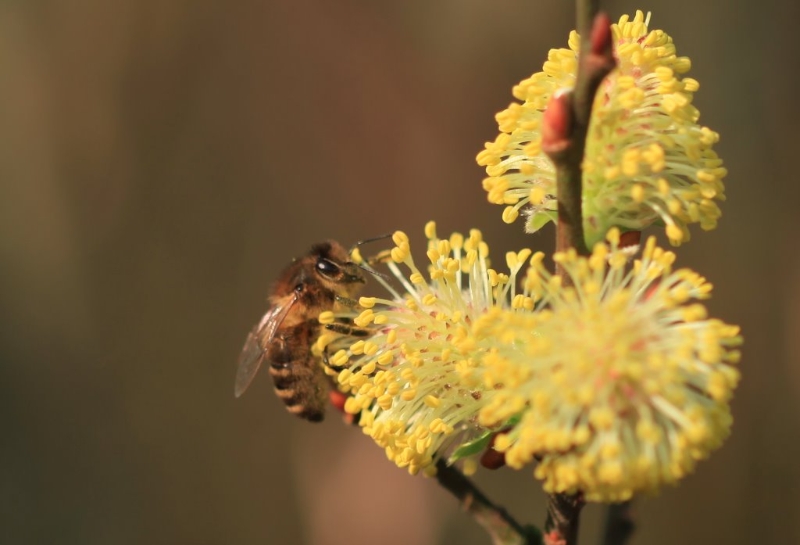
We have recently enjoyed what felt like the first real taste of spring. Yesterday, I spent some time watching and photographing the bees as they made the most of a calm, warm day. At the hive entrances, large amounts of gorse pollen were being brought in, along with the occasional yellow-dusted worker returning from willow blossom.
Forage and honey flow
The spring build-up is quite slow on Bardsey, probably because of the exposed nature of the island and because nectar sources do not begin to appear in any quantity until late May. The first of these is the wonderful salt-tolerant thrift, or sea pink, which carpets much of the coastal heath and ancient earthen banks. Nestled among the taller flowers are the vivid blue flowers of squill, which the bees also visit.
Literature suggests that thrift can produce a honey surplus in favourable conditions, but I have yet to see this happen. The main honey flow usually comes in late June and July, corresponding with the flowering of the abundant white clover. For extra flavour, the bees also gather nectar from bramble, bird’s-foot trefoil and bell heather.
The Bardsey apiary
I have been pleasantly surprised by the consistent honey harvest over the last eight years, usually a modest 30 to 40lb per hive. Last year I sacrificed some of the crop in order to increase colony numbers, and I now have six hives. I hope this will help meet demand for Bardsey Honey at our café and craft shop, which regularly sells out part way through the summer.
One of the advantages of such a unique and isolated apiary is that it is largely beyond sources of disease and the reinfestations that can affect mainland bees. I have not seen a varroa mite in my hives for at least three years, much to my relief.
However, isolation also has its disadvantages, particularly the weakening effect of inbreeding. While I still had bees in Conwy, I would regularly bring nuclei over to strengthen the gene pool. More recently, without those colonies and with the difficulty of transporting nucs, I have begun to use bought-in queens. I will be watching with interest this season to see how they perform compared with their inbred predecessors.

Spring on the island
Spring is a time of new life and also the busiest period of the farming calendar. Lambing is already under way, a month earlier than expected, thanks to the work of a mystery fence-jumping ram. So far we have had 26 new arrivals out of a possible 450. Lambing leads rapidly into calving, then cultivation, and before we know it we will be looking forward to our annual two weeks away as a family, after GCSEs and A-levels.
Hopefully the winds will ease long enough this year for some of you to visit us on this side of the water.
We look forward to welcoming you.
Steve Porter, March 2012.