
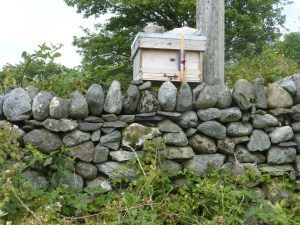
Swarms of honeybees will be looking for a home from May to early July. That home could be in a chimney, the roof of a house, or your bait hive.
Try setting up a bait hive in each apiary, or near a feral colony in a tree or roof space, with the landowner’s permission. It is considered impolite to place bait hives near another beekeeper’s apiary.
What you will need
- A solid wood hive floor, or a mesh floor with the catch tray fitted
- Frames of foundation
- Crown board
- Hive roof
Option 1
If your bait hive is at home and you can check it every day, use a brood box with one used brood frame or comb from a healthy colony at the back of the box, inside an otherwise empty brood box. Bees prefer this set-up because they can assess the volume of the empty box.
You must fill the box with frames of foundation very soon after a swarm has arrived, otherwise the bees will fill it with wild comb.
Option 2
If the bait hive is away from home, use a brood box with one old frame or comb at the back, then fill the rest of the box with frames of foundation. This is less successful, but still worth trying if you cannot check the hive every day.
Swarms are said to prefer a location well off the ground.
Update June 2022: You must check your bait hives regularly for new arrivals during the June gap. A swarm can soon starve if it is not fed.
Aftercare
When, or if, your bait hive has been occupied, try to move the bees to a suitable long-term location before they learn to fly back to the bait hive. Then set up another bait hive on the site.
You can treat the broodless bees with oxalic acid to reduce phoretic varroa mites. Feed the swarm with 1:1 sugar syrup two days after arrival.
If sycamore is providing a honey flow, the bees will quickly draw out foundation and can fill a brood box with brood and stores within ten days.
Check that the queen is laying healthy brood.
Further information
We would welcome any comments. Please email the Secretary at secretary@conwybeekeepers.org.uk.