
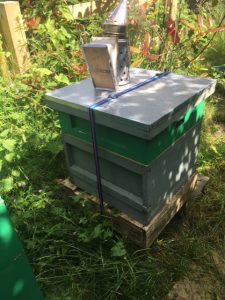
These notes are intended as guidance to support the sale of hives of bees. They rely on goodwill and fair dealing, and aim to avoid misunderstandings.
We recommend buying locally wherever possible. Bringing in bees and equipment from unknown sources can spread disease. National hives generally sell more easily than WBC hives, which are often in poorer condition and harder to move with bees.
Sellers should give an honest assessment of the temper of the bees.
Guidance for selling hives of bees
- We recommend selling hives during the active beekeeping season (April to September). Prices are typically higher in spring than late summer.
- Contact Conwy Beekeepers (or your local association) before offering bees for sale. We may be able to help find a local buyer. Please include pictures and details.
- Arrange inspection by the Seasonal Bee Inspector before sale. The inspector will assess bee health but will not advise on price.
- Advise the buyer of recent varroa treatments and provide any hive records.
- Agree the condition of bees, combs and equipment before the sale.
- Prices should be agreed between buyer and seller. Overwintered colonies in April and May usually command higher prices.
- Agree what is included in the sale (for example hive stands, bricks or slabs).
- Agree a date for removal of the hives.
- The buyer should agree to purchase the bees and hives as seen.
- Payment should be made in full by bank transfer before the hives are removed.
- A receipt should be provided, with a copy for both buyer and seller.
- The buyer should inform the seller once the site has been cleared.
- The seller should inform the Seasonal Bee Inspector of the new owner’s details, with permission.
- We welcome feedback on this guidance.
Compiled by Peter McFadden, Conwy Beekeepers.
Please email secretary@conwybeekeepers.org.uk
Updated August 2024