Feeding bees
Why do beekeepers feed bees?
In a good honey year, feeding is often unnecessary. In a poor year, feeding is essential to ensure colonies survive.
Autumn feeding with sugar syrup builds stores to last until spring. Some beekeepers use fondant or candy in winter.
Spring feeding can stimulate brood production. Emergency feeding may be needed at any time if a hive feels light. Nucs and swarms usually require feeding to build up.
Which sugar should I use?
Granulated white cane or beet sugar.
How much sugar and water?
- Autumn: 3 kg sugar to 1.5 litres hot water
- Spring: 3 kg sugar to 3 litres hot water
Mix thoroughly and allow to cool before use.
How long will syrup keep?
Three to four days maximum.
Can I feed bees with a super on the hive?
No. Bees may store syrup in the super, spoiling the honey.
What are the risks when feeding bees?
Drowning: Bees can drown in open syrup.
Robbing: This can quickly overwhelm weaker colonies.
- Reduce the hive entrance
- Feed in the evening
- Avoid spilling syrup
Types of feeders
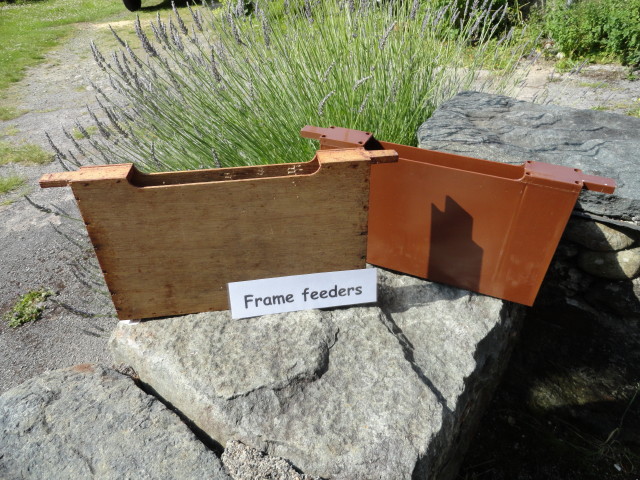
Frame feeder
Holds 2 to 2.5 litres. Ideal for nucs and swarms. Can double as a dummy board.
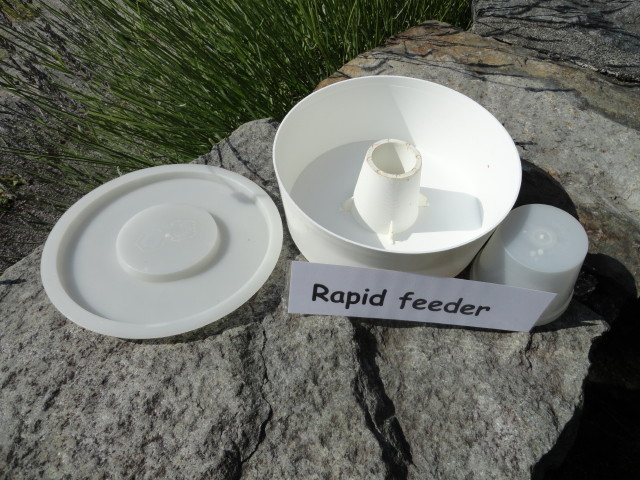
Rapid feeder
Holds about 2 litres. Placed above the crown board inside a super.
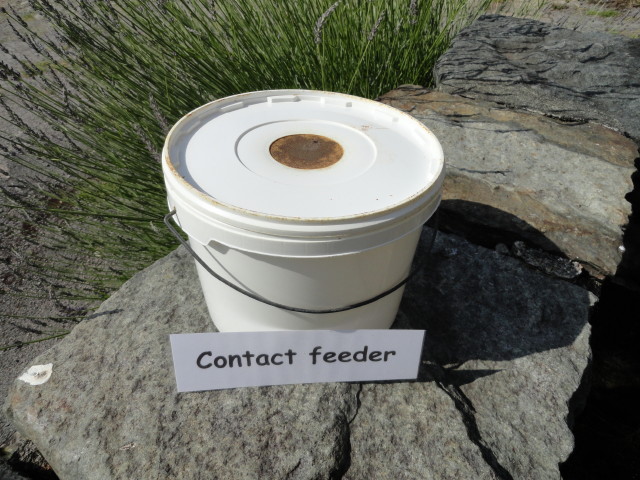
Contact feeder
Available in sizes from 1 to 5 litres. Good for slow spring feeding and can be homemade.
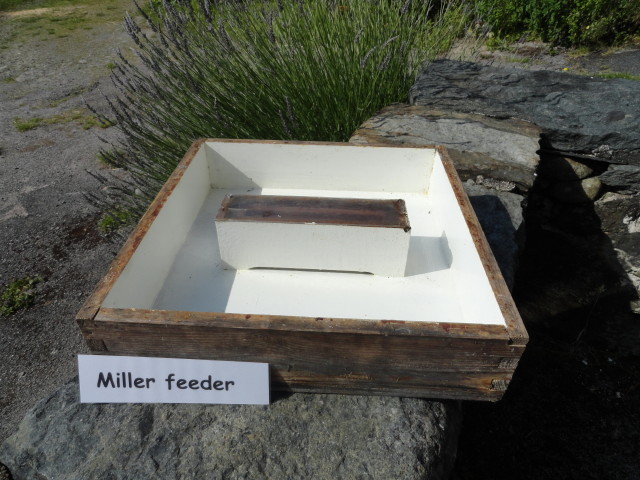
Miller tray feeder
Holds 10 to 12 litres. Ideal for autumn feeding. The hive must be level.
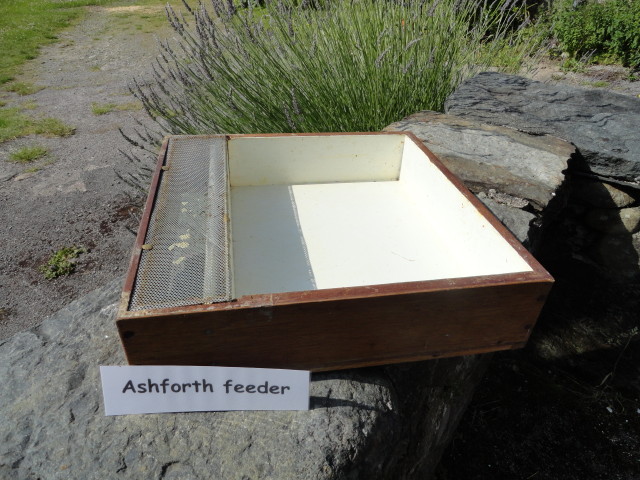
Ashforth tray feeder
Similar to a Miller feeder, but easier to make.
When do I stop feeding nucs and swarms?
When the brood box is full of bees and drawn comb.
When do I stop feeding colonies for winter?
Best practice
- Feed in good time
- Avoid drowning and robbing
- Keep feeders clean and stored properly
- Do not leave dirty feeders on hives
We welcome your comments and suggestions. Please email the Secretary at secretary@conwybeekeepers.org.uk.
Updated August 2025